“Can you grieve without suffering a tangible loss?” Ann asked, almost to herself, on one of their daily evening walks.
Ed looked at her. “What do you mean?”
He liked her like that. When they did things where they didn’t have to focus on each other’s faces—like walking or driving—she became pensive and let her thoughts stretch out.
“I mean… traditionally, grief is felt by people who lose someone close to them, right? What if I tell you I feel it anyway?”
“Oh. What do you feel, exactly?”
Ann sighed. She crossed her arms and held them against her chest, looking out into the distance at children playing in the park.
“I… it’s.. difficult to explain. It’s like every sad thing in the world makes itself known to me. Old people who are helpless and alone, animals that are killed and abused, greedy politicians and corporations, climate disasters, bloody wars, for god’s sake. There’s always so much going on. I guess I’m always thinking of the suffering and the pain, you know? It overwhelms me, and leaves me feeling… intense sorrow. Almost like a constant state of grief.”
“I understand, Ann.”
“You do?”
“I think I do. I guess an open heart is like a big container. It’s not a sieve. You can’t filter out the bad. It takes everything in.”
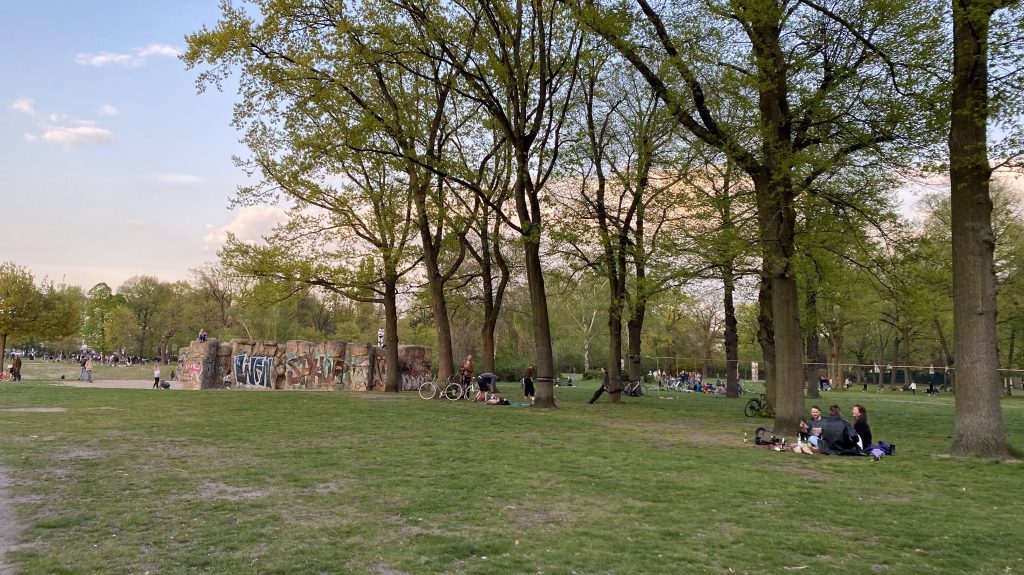
They were now sitting on a bench, the winter sun warming up their faces. The park was filled with families, dogs and picnic baskets.
“But don’t you think there’s a balance in the world?”, Ed asked. “There’s so much joy and colour and love.”
“Theoretically, yeah. Sure. But I feel that’s what we tell ourselves to prevent the hurt from drowning us. Of course I love the love, the happiness, the acts of kindness and the seasons and flowers and food and nature. But that doesn’t make me feel better about the other half of the world that’s full of violence and suffering. Where do you stow all that?”
Ed didn’t say anything. For a while, they stared at a large tree in the distance, the leaves performing a gentle dance with the sunlight.
“I don’t know how to answer that, Ann. Sometimes I’m amazed at your capacity to feel so much for the world. I’m so caught up in my own mental chatter and anxieties and existential dread, I barely have the energy to think about larger issues.”
Ann smiled at him. “It’s not like I enjoy letting all this affect me to this extent. It just… does. I have a reaction to almost everything I see. The other day I saw a family in a horse carriage. A handsome couple and two little girls. They seemed so happy. But I could only think about the horse. About how it had to live a life pulling a carriage. I wondered about its mum, its family, whether it misses them. I felt sad for all animals who are forced to live a life that isn’t theirs.”
“Oh, Ann.” Ed took her hand and stroked the back of her palm with his thumb.
She looked at him. “Roxane Gay used a phrase in one of her books to describe a character. She said this woman was “prone to the maudlin.” I really felt that. I guess I’m that way too. I gravitate towards pain, deep fears, sad emotions. I feel like a lot of life is lived in the light, and not enough in the dark.”
“Wow, yeah. You know? There was this one time I’d found an injured bird on the street. I got it home and took care of it for a while. I cancelled all plans with my friends because I didn’t want to leave it alone. I still remember how inconsolable I was the day it died. I tried telling a friend about it and he just made fun of me for crying over a stupid bird. I don’t think I ever told anyone about it again.”
“Oh no. Why didn’t you tell me this before?”
Ed shrugged. “I guess I really had forgotten about it for a while. But when I think about it, the memory of it… it still hurts me just as much. Thinking about how I couldn’t save that little creature. How tiny and helpless it was.”
“Oh, you poor thing,” Ann held him close and rested her head on his shoulder. “But you know… I’m sure you gave it a few good moments of comfort while it lived.”
“But it died. On my watch.”
“I’m so sorry. I know it feels like you should have done something. And it must have felt wrong to know that its life ended abruptly, while yours was still the same. But you’re not responsible for every sad thing that happens around you. You’re kind. You’re sweet. We can’t save the world. But we can take a small sliver of it and make it better.”
Ed looked at her and smiled.
“What’s that smile for?”
“What you just said… maybe apply it to your own self sometimes?”
Ann laughed.
“Seriously, Ann. I know you notice all the sadness. But you also notice the softness. You let people express themselves. You give them a shoulder. You let them be. You accept them without question. There’s power in that, you know. In your own gentle way, you’re doing a lot.”
“You think it’s enough?”
Ed kissed her forehead. “Yeah, I do.”
Ann sighed, and let her body melt against his. The sun was setting now. The sky was turning a fiery crimson orange.
“Ed?”
“Hmm?”
“People like us… where do we belong?”
“I don’t know. For now, right here seems pretty nice.”




 Butterflies and Hurricanes
Leave a reply to Giri Cancel reply